
New Feature: Turn Call Recordings Into Searchable Transcripts
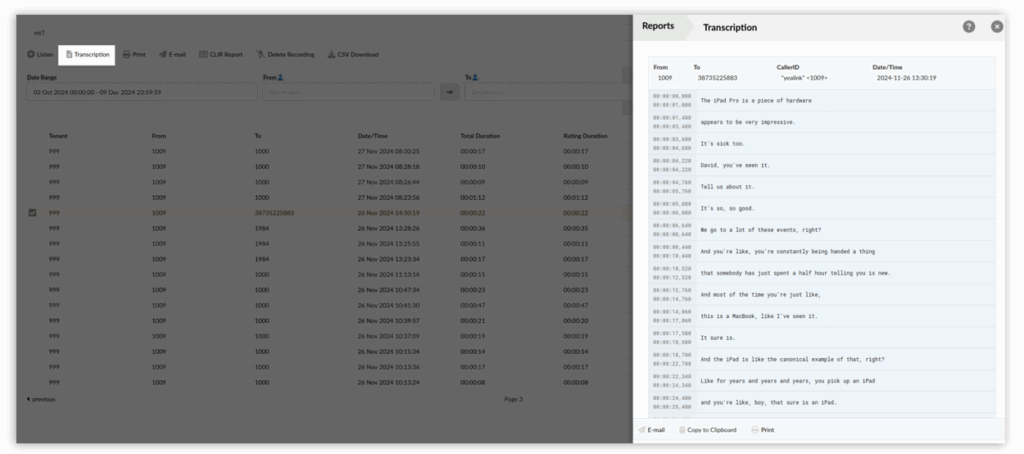
Call recordings are valuable, but listening back to a long conversation can take time. With the new Call Transcription feature, users can now transcribe recorded calls directly from the call log.
This makes it easier to log, review, and catalog conversations without relying only on memory, handwritten notes, or audio playback. A recording becomes a written record your team can use to follow up, document details, and better understand what happened during a call.
What Is Call Transcription?
Call transcription converts a recorded phone conversation into written text using speech-recognition technology. Instead of listening to an entire audio file to find one important detail, users can review a written version of the conversation.
With this feature, transcription is available directly from the call log. Users can locate a recorded call, generate or access its transcript, and use that text as part of their communication records.
Why Written Call Records Matter
Important business details are often discussed over the phone:
Customer questions and service requests.
Next steps and deadlines.
Pricing or product discussions.
Troubleshooting information.
Appointment details.
Sales objections and follow-up needs.
When those details live only in a call recording, they can be difficult to find later. A transcript creates a readable record of the conversation, making it easier to document what was discussed and keep information organized.
Log And Catalog Conversations More Easily
The core benefit of Call Transcription is simple: it makes call records more useful.
Instead of treating recorded calls as audio files that must be replayed, your team can turn them into text that can be logged and cataloged alongside other business information. This helps create a more complete history of customer, vendor, and internal conversations.
For example, a sales representative can review a customer call, pull out the agreed next steps, and add those details to the appropriate account notes. A support employee can document the problem described on a call and make sure the next team member has the right context.
Save Time Reviewing Calls
Listening to a 20-minute call takes 20 minutes. Reading a transcript or scanning for a particular part of the conversation can be much faster.
Transcripts allow managers and employees to review the content of a call without repeatedly starting, stopping, and replaying audio. They can focus on the most relevant parts of the conversation and spend more time acting on the information. Searchable written records can make it easier to locate specific topics, customer concerns, or action items.
Improve Follow-Up And Accountability
Good follow-up depends on clear information. When a call includes a promised callback, requested document, scheduled appointment, or service issue, a transcript can help employees confirm the details before taking the next step.
This reduces the risk of:
Forgetting a customer request.
Misunderstanding an agreed-upon next step.
Asking customers to repeat information.
Losing important context when a conversation is handed to another employee.
Call Transcription gives teams a reference point for what was actually said, helping them deliver a more consistent customer experience.
Support Training And Quality Review
Call recordings are often useful for training, but reviewing audio alone can be slow. Transcripts give managers another way to evaluate conversations and coach employees.
A supervisor can review how a team member handled a customer question, identify helpful language, or spot an area where the conversation could have been clearer. Written records also make it easier to compare recurring customer concerns and recognize patterns that may require changes to a process, script, product, or training program.
A Practical Example
Imagine a customer calls about a delivery issue and provides an order number, contact information, and preferred resolution. The call is recorded, but the service representative is handling several other requests that day.
With Call Transcription, the representative can open the call record from the call log and review the written conversation. They can quickly confirm the order number, understand the problem, document the requested outcome, and follow up without asking the customer to repeat everything.
That is better for the employee, and it is better for the customer.
Keep Recording Compliance In Mind
Call Transcription works from call recordings, so the same recording rules apply. Consent requirements can vary based on where participants are located and the laws that apply to the call. In the United States, federal law generally establishes a one-party-consent baseline, while some states require all participants to consent to recording.
Before using call recording or transcription, businesses should make sure their notification practices and policies meet the requirements that apply to their location, customers, and industry. This article is general information, not legal advice.
Better Records From Every Conversation
The new Call Transcription feature helps turn voice conversations into organized business knowledge. By making transcripts available from the call log, it gives users an easier way to log and catalog conversations, review key details, and support better follow-up.
For teams that depend on phone conversations every day, that means less time replaying calls and more confidence that important information will not get lost.
Why Choose Fireline Communications?
- Same-day service replacement
- Crystal-clear call quality
- No equipment changes required
- We match your existing features
- Unbeatable pricing
We can replace your service in one day and keep your business connected without interruption.
Contact Fireline Communications today to upgrade your lines. You can also call us now! 1-877-347-3147
We’re local, responsive, and ready to earn your trust. Stop waiting. Start communicating.
FAQ
What is Call Transcription?
Call Transcription converts a recorded phone call into written text. It gives users a readable record of the conversation without requiring them to listen to the entire call recording.
Where can users access call transcriptions?
Users can access Call Transcription directly from their call log for calls that have been recorded.
Do I need to listen to the entire recording first?
No. A transcript gives you a written version of the recorded conversation, so you can review the call content without listening through the full audio file.
How can Call Transcription help with follow-up?
It helps employees confirm what was discussed, document action items, capture requested next steps, and keep customer details organized before following up.
Can transcripts help with employee training?
Yes. Managers can use written call records to review how conversations were handled, identify coaching opportunities, and share examples of effective communication.
Does Call Transcription replace call recording?
No. Call Transcription works with recorded calls by converting the call audio into written text. The recording remains the source conversation, while the transcript makes its contents easier to review and document.
Is call recording consent still required?
Call Transcription is based on recorded calls, so the same recording-consent requirements apply. Businesses should understand the laws and notification rules that apply to their calls, locations, and industry.
Who benefits most from Call Transcription?
The feature is useful for sales teams, customer service teams, supervisors, account managers, administrative staff, and any employee who needs to document or revisit phone conversations
Last Updated on August 12, 2026